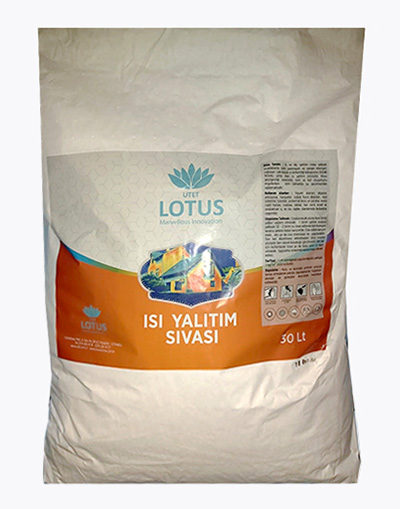
During our Combi Boiler and Radiator applications since 2012, we have seen that many homes and workplaces are insufficiently insulated. In light of this fact and thanks to the experience, knowledge and devoted work of our team, Lotus thermal interior/exterior, floor and roof insulation products were created.
The most important difference that distinguishes Lotus Thermal Insulation products from other products is that they provide permanent insulation with the same performance. The products do not lose their properties over time, are not affected by moisture, and their efficiency does not decrease.
Although 1 m3 of classical rough plaster weighs 2200 kg, Lotus Thermal Plaster weighs only 300 kg due to the light materials it contains. This feature provides a significant advantage in terms of the load carried by the building.
All materials used in LOTUS insulation products are 95% recyclable, anti bacterial and breathable. Since old type insulation products do not breathe, it is necessary to freshen the air of the isolated space, which causes heat loss and increase in carbon footprint. LOTUS insulation products provide a sustainable solution by controlling carbon footprints.
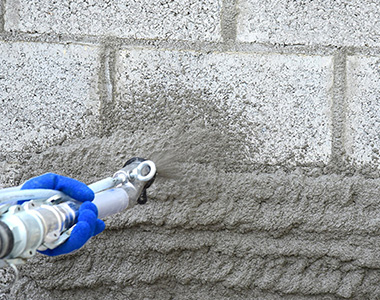
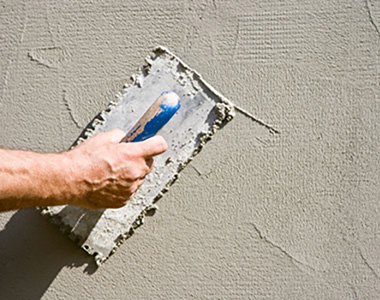
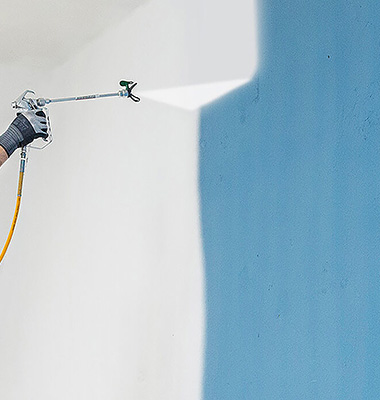
Clean water is added to the plaster mixture and stirred with a rough plaster mixer until it reaches the proper consistency for application. It can be applied using a trowel or a spray gun. After applying a 2-3 cm layer, allow it to dry before adding another layer of the same thickness if needed. The plaster can be applied directly to concrete and filler materials, but for painted, slippery, or smooth surfaces, an exposed concrete primer must be used beforehand. When applying by hand, use a notched ceramic trowel for the first layer and wait for it to dry before continuing. For the final coat, it is best to use a steel plaster trowel for a smooth finish.
Proper insulation is achieved by applying a 1-2 cm thick layer to interior walls that face the exterior. This prevents heat energy generated inside from being wasted on heating the walls. No holes are drilled into the building structure during the application of the thermal insulation.
Lotus Insulation Plaster is made by combining top-quality insulating materials from Turkey's natural resources, such as boron and perlite, resulting in a product with a thermal conductivity coefficient of 0.048 W/mK, making it superior to other insulators.
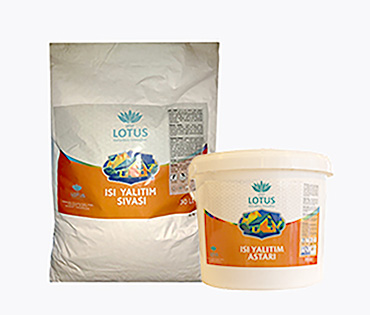
One bag of Lotus Thermal Plaster covers an area of 3 m² with a thickness of 1 cm.
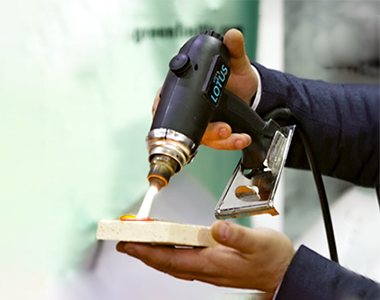
Additionally, Lotus Thermal Plaster is fireproof, even at temperatures as high as 2,200°C, and helps prevent fires caused by radiation and convection. As demonstrated in the image below, the lower surface of a 2 cm-thick layer of Lotus Thermal Plaster remains at a normal temperature, even when the upper surface is exposed to a hydrogen flame of approximately 2,000°C.
Thermal insulation starts from the inside. If you do not have thermal insulation applied internally, you will need to heat the entire mass of the building. Insulating from the inside significantly helps retain thermal energy by creating resistance to the flow of heat through the walls, preventing it from escaping to the outside environment.
No harmful substances were used in the production of LOTUS Insulation Products, which have antibacterial properties. All materials used in LOTUS Insulation Products are 95% recyclable.
The products we obtain by bringing together the most superior insulation materials such as boron and perlite, which are obtained from Turkey's domestic resources and are the best insulation materials, provide us with many meaningful contributions in addition to insulation.
The average heat transfer coefficient of 0.048 W/mK will be more clearly revealed when compared to other insulators, and will play an important role in your preference of Lotus Insulation Products.
Additionally, your home will continue to breathe after insulation, especially with interior wall insulation, which is more closely related to your health.
Traditional insulation methods do not allow for proper airflow, making it necessary to open windows to refresh indoor air, resulting in the loss of some of the benefits of insulation. This heat loss contributes to a larger carbon footprint.
Thermal insulation starts from the inside. If you do not have thermal insulation applied internally, you will need to heat the entire mass of the building. Insulating from the inside significantly helps retain thermal energy by creating resistance to the flow of heat through the walls, preventing it from escaping to the outside environment.
For interior applications, mix the product with an equal amount of water (1:1) using soft, gentle movements until a homogeneous consistency is achieved. Avoid using hard or sharp surfaces, and do not use a mixer. Once the mixture is ready, apply the first layer and allow it to dry. After drying, apply the second layer, and once it dries, proceed with the final layer. Upon completion, you’ll have an insulated wall with an off-white finish. If desired, plastic or water-based paint can be applied over it to achieve the desired decoration.
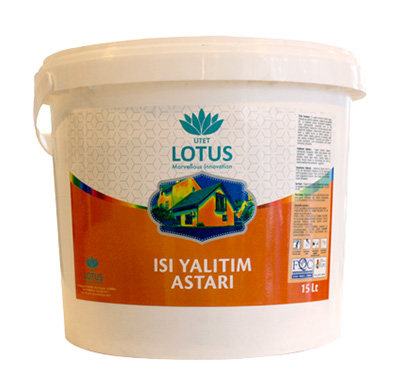
A 15 kg container of paint covers approximately 20 m².
LOTUS Insulation Plaster is an efficient solution for adding thermal insulation to newly constructed buildings, eliminating the need for extra labor or intermediate layers. The best insulation results can be achieved by applying the plaster from the interior. When applied inside, the insulation focuses on heating your living space, rather than expending energy on heating the walls.
An effective insulation system can be created by applying a 1-2 cm thick layer of plaster to exterior-facing walls, followed by a coat of Lotus Insulation Paint with a thickness of approximately 2.5-3 mm. This way, you not only meet your painting needs but also improve insulation over time. The combined application reduces heat loss, particularly through convection and radiation.
| COMPARISON OF INSULATION MATERIALS | ||
|---|---|---|
| Products | Thermal Insulation Coefficient | Product Raw Material |
| XPS | 0.030 - 0.034 | Petrolium |
| Glass Wool | 0.035 | Petrolium |
| Rock Wool | 0.035 | Petrolium |
| Styrofoam | 0.038 | Petrolium |
| Lotus Thermal Plaster | 0.048 | Organic |
| Lotus Thermal Paint | 0.048 | Organic |
View File: Insulation Plaster Technical Data →
When selecting External Thermal Insulation Material for a building, several important health, safety, and efficiency criteria need to be considered.
Primer or Additional Materials: Depending on the material, it may require a primer or mesh reinforcement to improve adhesion, especially for smooth, painted, or non-porous surfaces. Brick, ytong (autoclaved aerated concrete), or concrete may have different compatibility requirements.
- Question: Can the insulation material adhere directly to different surfaces, or does it need primers, bonding agents, or wire mesh for better stability?
Weather Resistance: The material should be able to withstand external conditions such as rain, UV radiation, frost, and wind without flaking, cracking, or degrading over time.
- Question: How long can the insulation material endure these conditions? (Ideally, at least 20-25 years without significant deterioration).
Equipment and Skilled Labor: Some insulation materials may require specific tools or specialized workers to apply them correctly. Misapplication can lead to poor insulation performance and higher maintenance costs.
- Question: Does the material require special equipment or trained professionals for correct installation?
Vapor Permeability: Breathable insulation materials allow moisture to escape from the building, preventing condensation, mold, and dampness. Non-breathable materials might require ventilation systems or strategies to maintain air quality and prevent moisture buildup.
- Question: Does the material allow the building to breathe, or does it require ventilation measures to prevent moisture problems?
Waterproofing Capabilities: Some thermal insulation materials also provide water resistance, protecting the building from rain and preventing moisture penetration.
- Question: Can the material also serve as water insulation, or is a separate water barrier necessary?
Fireproofing Properties: Fire resistance is crucial, especially in areas with strict building codes related to fire safety. Non-combustible materials can significantly reduce fire risks.
- Question: How resistant is the material to fire, and does it comply with local fire safety regulations?
Thermal Conductivity (U-Value)***: The thickness of the insulation material directly impacts its thermal performance, which is measured by its U-value (the lower the U-value, the better the insulation).
- Question: How thick does the material need to be to achieve the desired level of thermal insulation?
Non-Toxic and Eco-Friendly: Some insulation materials may release harmful VOCs (volatile organic compounds) or contain substances that could impact indoor air quality over time. Others may be made from recyclable or eco-friendly materials.
- Question: Are the materials non-toxic, free from harmful chemicals (like formaldehyde or asbestos), and environmentally sustainable?
Soundproofing Qualities: Some thermal insulation materials also provide soundproofing benefits, reducing noise pollution in addition to thermal control.
- Question: Does the insulation offer any soundproofing benefits, and is this important for the building's location?
Cost-Effectiveness: Both the upfront cost and long-term maintenance expenses should be considered. Some materials may be more expensive initially but offer greater savings over time due to durability, energy efficiency, and low maintenance requirements.
- Question: What is the initial cost of the material, and what is the long-term return on investment in terms of energy savings and maintenance?
Carbon Footprint: Consider the material’s environmental impact in terms of production, transportation, and disposal. Sustainable, recyclable, or locally sourced materials may have a lower carbon footprint.
- Question: Is the material recyclable, and what is its environmental impact in terms of energy consumption and waste generation?
Repairability: If the material cracks or gets damaged, consider how easy it is to repair without compromising the overall insulation quality.
- Question: Can the material be easily repaired or replaced if damaged?
Appearance: Some insulation materials may alter the appearance of the building. Ensure that the material can be finished or coated to match the desired aesthetic.
- Question: Can the material be painted or finished to achieve the desired look, or does it come with a pre-set finish?
When choosing external thermal insulation, you need to evaluate a combination of technical performance, health and safety factors, and environmental considerations. Materials should not only offer effective insulation but also be safe for occupants, long-lasting, and contribute to a sustainable building solution.
When selecting interior thermal insulation materials such as plaster, paint, or primer, there are several key criteria to consider to ensure both effective insulation and a healthy indoor environment. These criteria help guide the selection of materials that provide thermal efficiency, durability, and comfort while ensuring the building’s interior remains safe and aesthetically pleasing.
The main goal of insulation materials is to reduce heat transfer. The material should have a low thermal conductivity (λ-value)***, which indicates its effectiveness in retaining heat within the space during winter and keeping it cool in the summer.
Criteria: Look for materials with a low λ-value and verify that the thickness of the plaster or paint provides sufficient insulation to meet your energy efficiency goals.
For example, thermal insulation plaster should be applied at a thickness that ensures adequate thermal resistance without compromising living space.
Interior insulation materials should allow the walls to "breathe" by permitting moisture vapor to escape. This prevents condensation, mold growth, and damage to the building structure.
Criteria: Choose breathable materials that balance moisture regulation and insulation. Materials like breathable plasters allow moisture vapor to pass through while keeping the walls insulated.
The materials used for interior insulation should not emit harmful chemicals or VOCs (Volatile Organic Compounds) that can negatively impact indoor air quality.
Criteria: Ensure the materials are non-toxic, low-VOC, and free from harmful substances like formaldehyde or asbestos.
Opt for eco-friendly, health-conscious options that comply with safety standards.
Especially for interior applications, fire resistance is crucial. Some insulation materials can act as a fire barrier, slowing down the spread of flames.
Criteria: Select materials that are fire-resistant or non-combustible. For example, fireproof plasters or thermal paints with high-temperature resistance can enhance fire safety inside the building.
The insulation material should maintain its insulating properties and structural integrity for an extended period without cracking, peeling, or degrading.
Criteria: Check the material’s durability and lifespan under typical interior conditions, such as exposure to moisture, heat, and physical impact. Long-lasting materials reduce the need for frequent repairs or reapplications.
The insulation material must be able to adhere properly to a variety of interior surfaces, including brick, concrete, drywall, or painted walls.
Criteria: Consider whether primers or bonding agents are needed for proper adhesion. For example, a primer may be necessary to prepare smooth or previously painted surfaces before applying insulation plaster or paint.
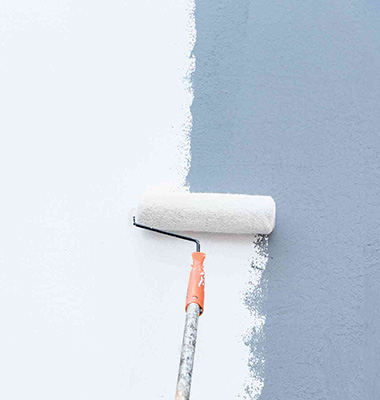
Some insulation materials are easier to apply than others, requiring fewer tools or specialized labor. For example, thermal paints may simply require a roller, while plaster might need more skillful application.
Criteria: Choose materials that fit within your project’s scope, considering ease of installation, labor costs, and the need for specialized equipment or trained professionals.
For interior applications, the insulation material should allow for customization, so you can achieve your desired look and finish.
Criteria: Select materials that can be painted over, textured, or smoothed to meet interior design preferences. For example, thermal paints or plasters that allow for decorative finishes or color coatings provide flexibility.
In addition to thermal insulation, some interior materials also provide soundproofing, which is important for noise reduction in residential or office environments.
Criteria: Consider materials that offer both thermal and acoustic insulation if noise reduction is a priority in the building’s interior.
Interior insulation materials should resist moisture to prevent the growth of mold and mildew, particularly in areas prone to humidity, such as kitchens or bathrooms.
Criteria: Look for plasters or paints with anti-microbial or moisture-resistant properties to protect the interior walls from dampness and mold.
The cost of insulation materials can vary significantly depending on the type, application method, and performance characteristics.
Criteria: Balance the cost with the efficiency and long-term savings that the material provides. Higher-quality materials may have a higher upfront cost but offer better energy savings and durability in the long run.
When choosing interior thermal insulation materials, it’s essential to balance thermal performance with health, safety, durability, and aesthetic considerations. Each material (plaster, paint, primer) has its own set of characteristics, so choosing the right one depends on the specific needs of the project, such as energy efficiency, breathability, fire resistance, and ease of application.
Lotus Exterior / Interior Thermal Insulation Materials, in addition to meeting all the criteria listed above, also provide water insulation.
*** What do K-Value (Thermal Conductivity) and U-Value (Thermal Transmittance) mean and how are U-Value calculated? →

